Latent Prints
Processing, Analysis, and Comparison
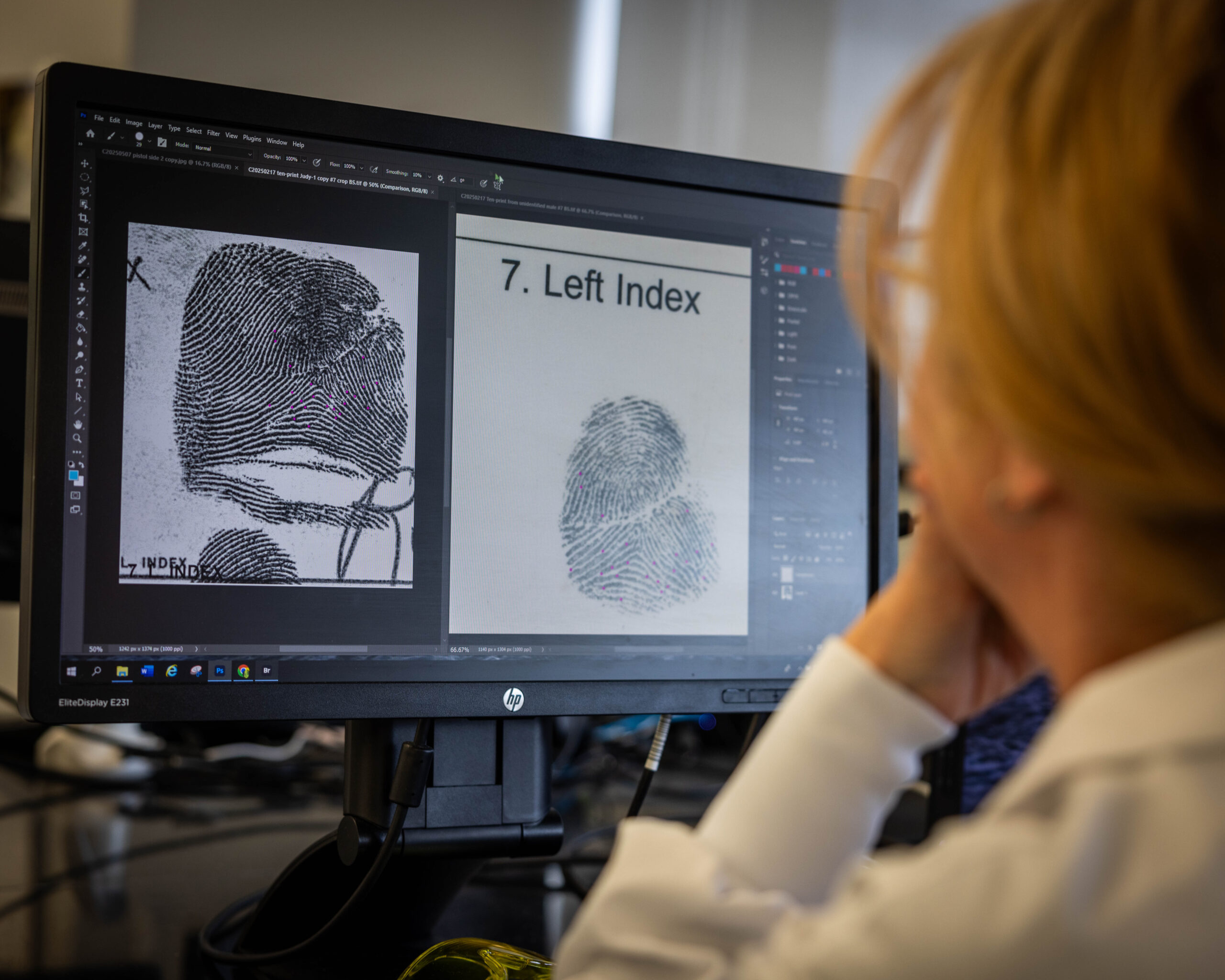
Latent print examination is a critical service provided by the Utah Bureau of Forensic Services (UBFS). Our dedicated team analyzes latent prints recovered from crime scenes to help identify individuals and solve cases.
Latent Prints Section
What we do
- The Latent Print Section at the UBFS plays a vital role in the administration of justice by providing critical analysis of friction ridge evidence.
- Our team of highly trained fingerprint analysts is dedicated to:
- Performing detailed comparisons of latent prints to known prints to identify or exclude individuals.
- Searching fingerprints and palm prints through databases containing millions of known prints.
- Providing expert testimony in court regarding fingerprint evidence.
Our team's training
- UBFS fingerprint analysts undergo rigorous training, typically spanning 2 years, to develop their expertise.
- This extensive training includes:
- The history of fingerprint science
- Fingerprint classification systems
- Latent print processing techniques
- Digital image enhancement
- Analysis, comparison, evaluation, and verification (ACE-V) procedures
- To maintain the highest standards of practice, our analysts participate in ongoing professional development through:
- Continuing education courses
- Regular review of scientific literature
- Advanced technical training
- Annual proficiency training
- Latent Print Examiner Certification (through the International Association for Identification. Learn more about the IAI.
Learn more about latent prints
Click or tap on a topic below to jump to that section
The science of fingerprint analysis
- The science of fingerprint analysis dates back to at least the mid-19th century, when it was used to establish identity and, in at least one case, exonerate the innocent.
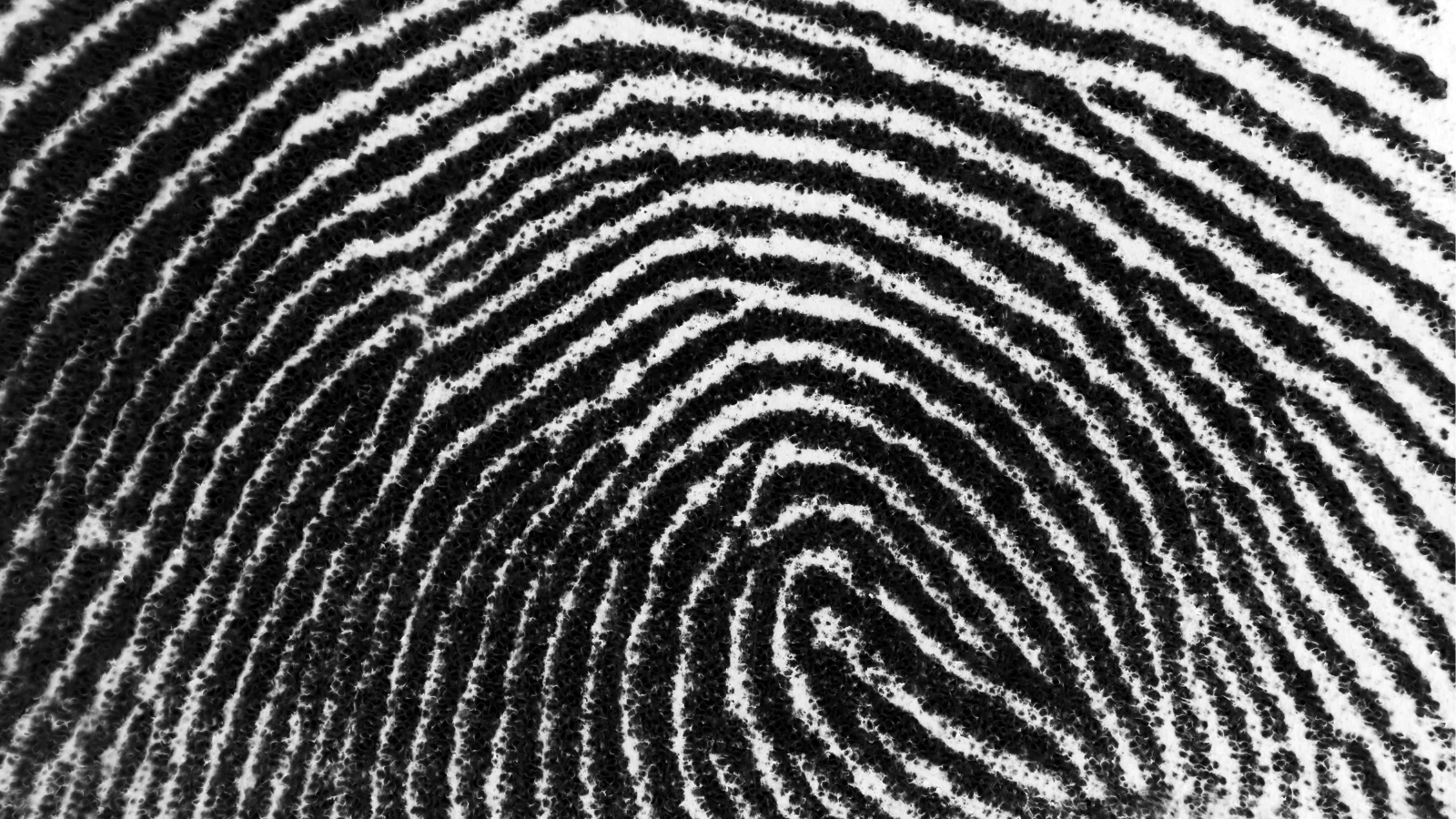
- Fingerprint analysis examines the impressions made by friction ridge skin, which is found on the palms and fingers of the hands and the soles of the feet.
- Friction ridges are raised portions of the epidermis that increase grip and tactile sensitivity.
- Friction ridge skin produces what are commonly known as fingerprints, as well as palm prints and (bare) footprints.
Two fundamental principles of fingerprint analysis
Fingerprint analysis is based on two fundamental premises:
- Fingerprints are highly discriminating (meaning that each print contains arrangements of features distinctive enough for an examiner to differentiate between individuals).
- Fingerprints are persistent throughout a person’s lifetime (i.e., they do not significantly change).
-

Latent prints: definition and characteristics
- Most prints encountered at crime scenes are not readily visible to the naked eye.
- The term "latent," meaning hidden, was originally used for prints that required enhancement in order to be visualized.
- Over time, the term "latent print" has become synonymous with "questioned print," and is often used to refer to any print found on evidence or at a crime scene.

Latent print enhancement techniques
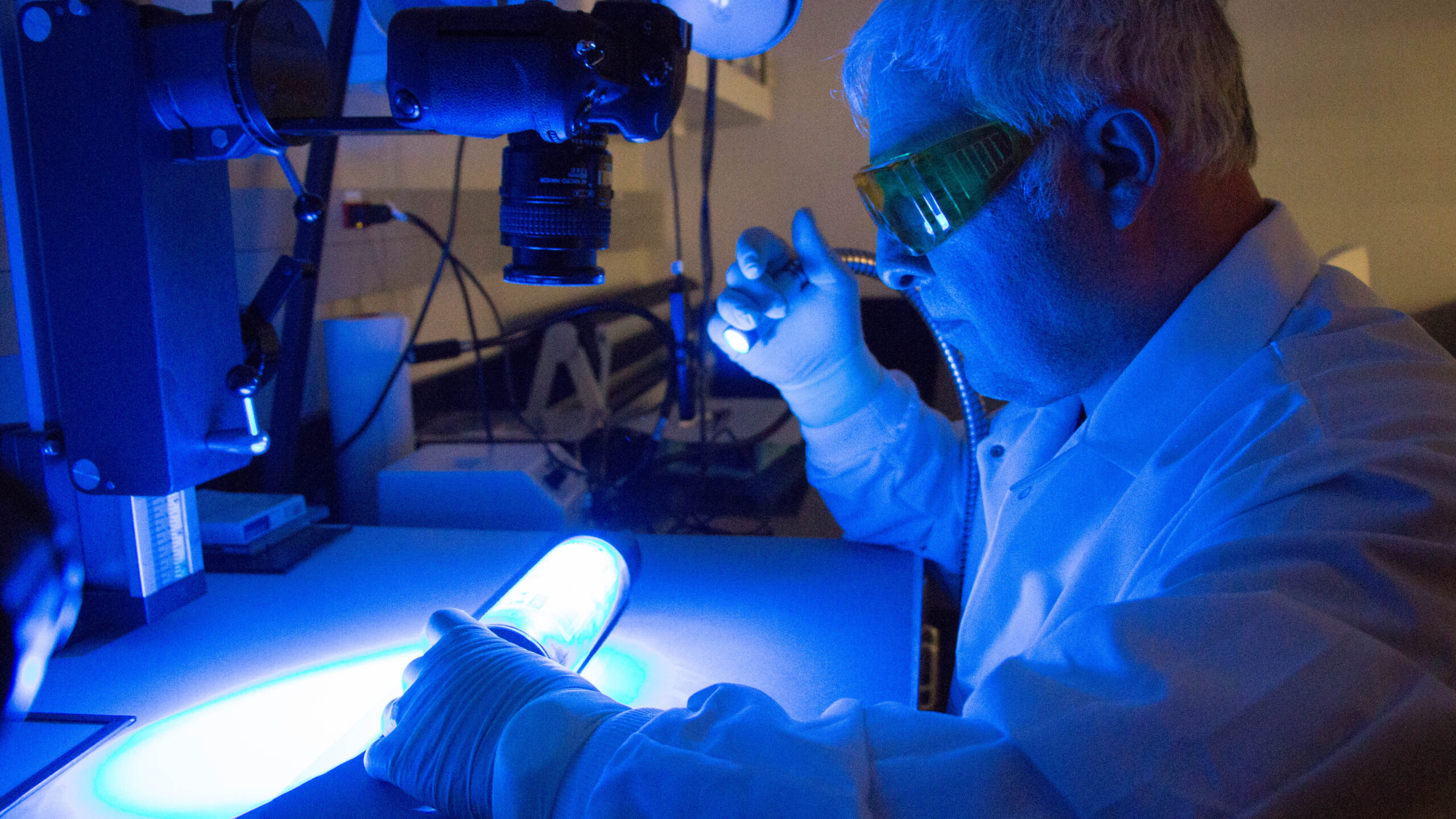
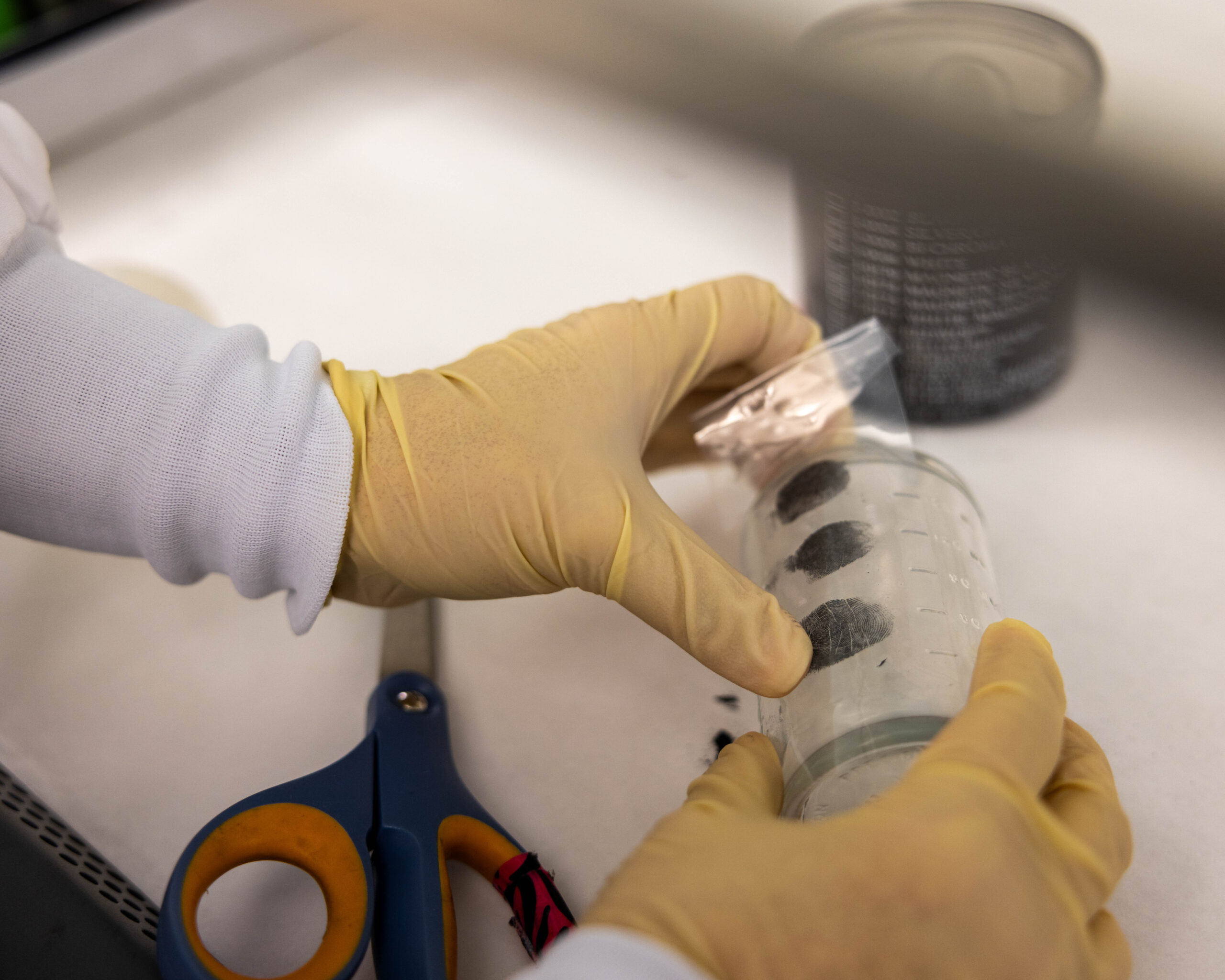
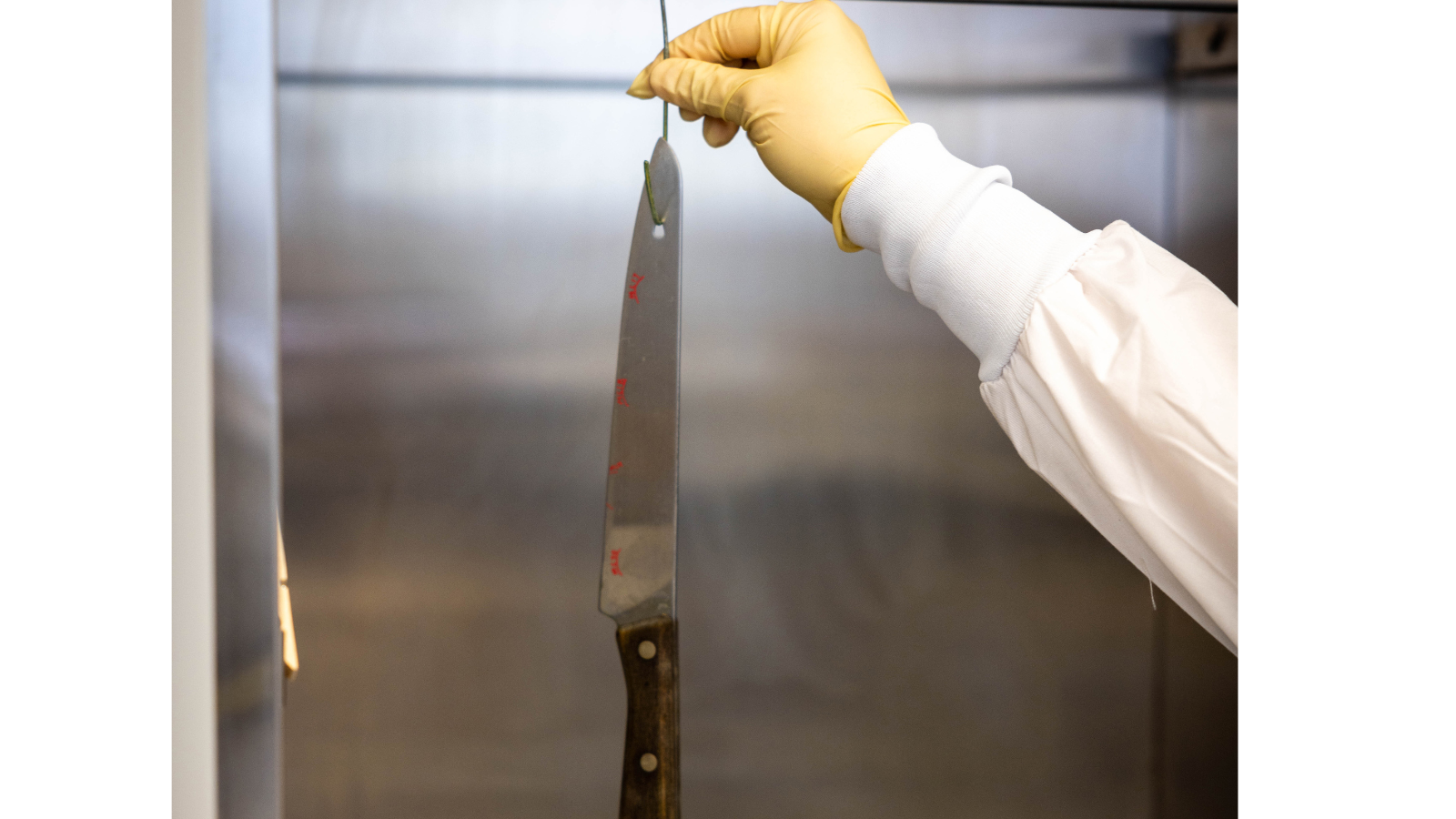
- The Identification (ID) Section at the UBFS employs a variety of methods to visualize latent prints.
- These procedures include:
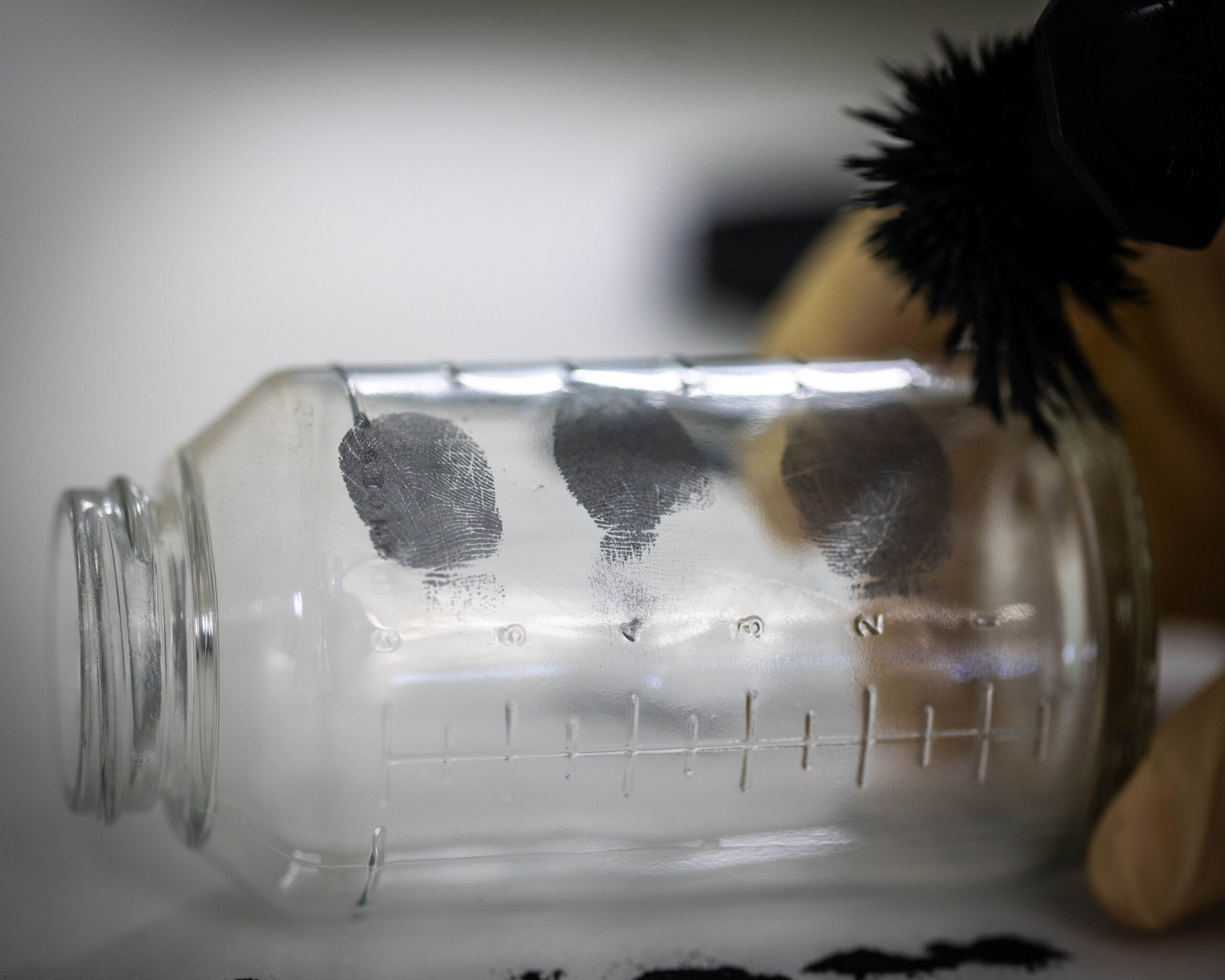
- Physical methods, including alternate lighting techniques, the application of powders (wet and dry), as well as casting materials methods.
- Chemical methods, such as Cyanoacrylate (superglue fuming), RAM, Basic Yellow, Ninhydrin, Indanedione, Amido Black, and Acid Fuchsin.
Surfaces suitable for latent print analysis
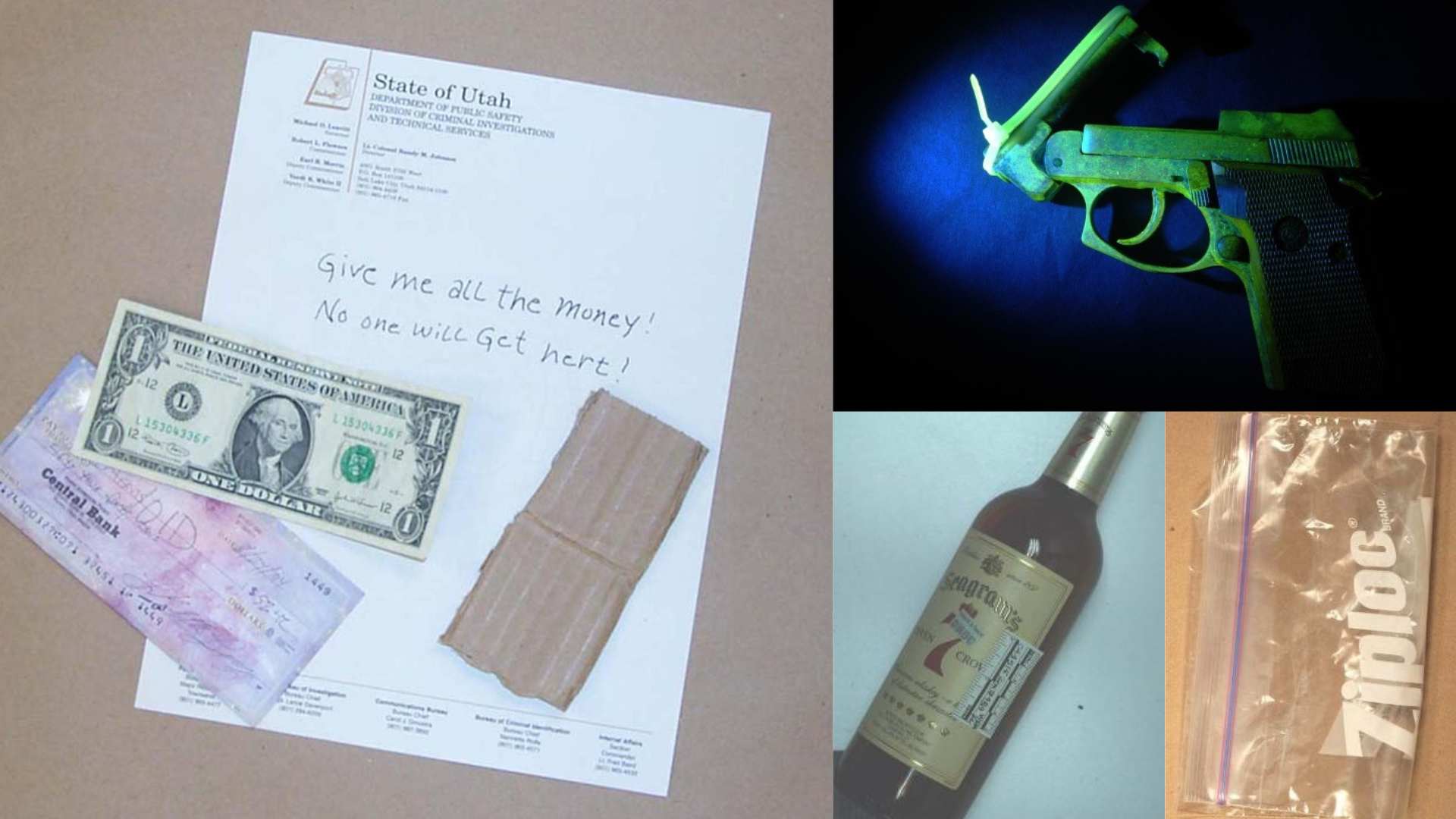
The ID Section can enhance latent prints on a number of surfaces, including, but not limited to:
- Porous Materials: Paper (including money), cardboard, certain woods.
- Non-Porous Materials: Glass, plastics, certain metals.
- Semi-Porous Materials: Magazine covers, post cards, treated cardboard packing
-
The latent print analysis process
- Once a latent print is obtained, it is compared with the known prints of a case’s suspect and elimination of prints from people known to have been at the crime location.
- If no suspect has been identified, and if the unidentified latent print is of sufficient quality, then the print may be entered into an Automated Biometric Identification System (ABIS).
Learn more about ABIS