Crime Scene Specialist
Basic Crime Scene Specialist Course
Crime Scene Specialist
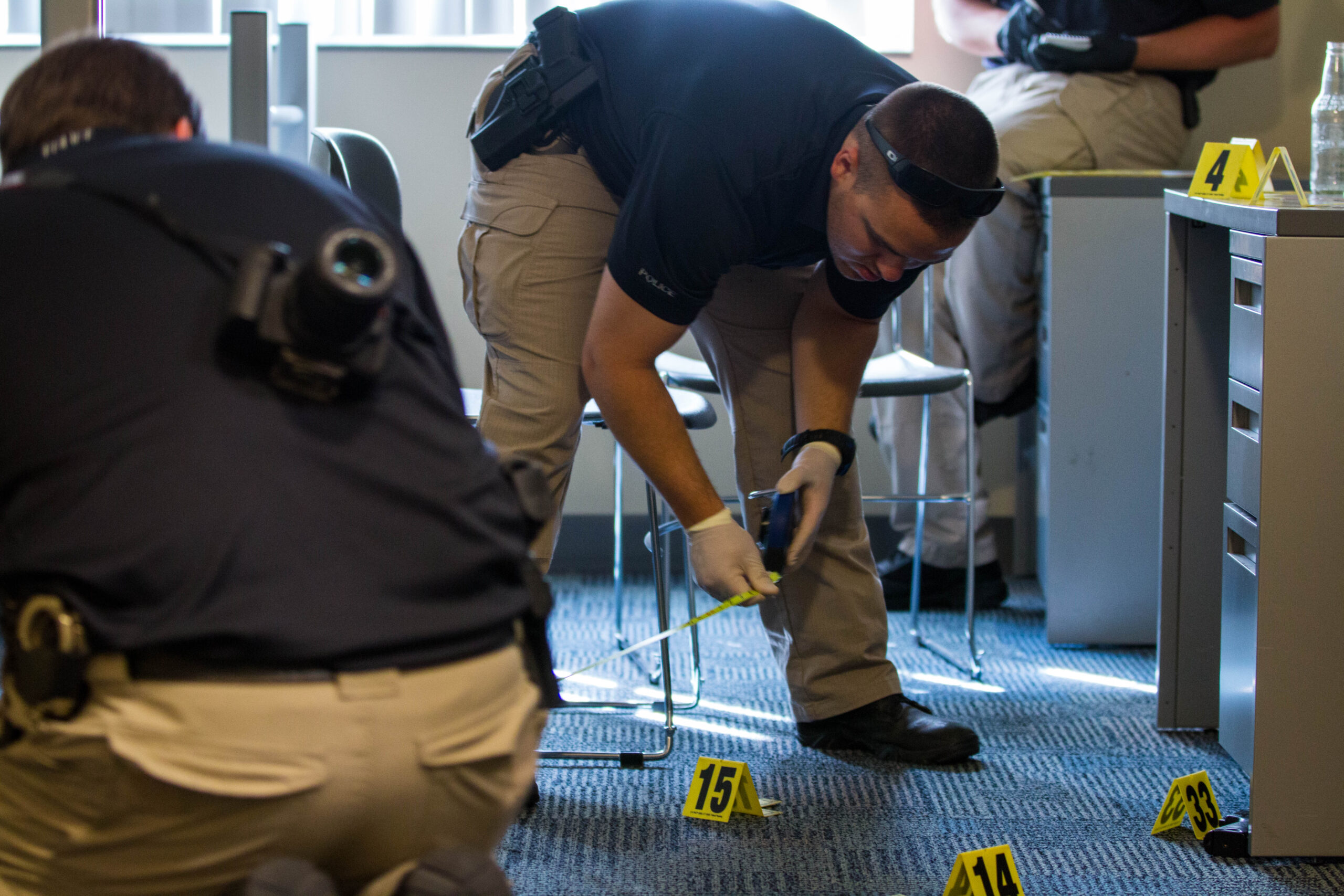
This course is geared towards any law enforcement individual who goes to crime scenes. It is a two-part course: a Basic and an Advanced course. Topics covered are
- documentation and preservation of the scene
- photography
- latent prints
- serological presumptive tests
- footwear/tire impressions
- bloodstain pattern documentation
- and evidence packaging.
Basic – September 28, 2026 - October 2, 2026
Advanced – October 12, 2026 - October 16, 2026
More information contact Bonnie Wilder-Estes
[email protected]Course Overview
The Crime Scene Specialist Class is an entry-level course designed to provide the new investigator with the correct tools to become familiar with evaluating, preserving, documenting, and collecting commonly encountered physical evidence types. If the student does well in the class and continues to practice these skill sets upon graduation, they can expect to develop proficiency in crime scene processing. Since most crime scene work is documentation, this is the focus of the course.
Required Photography Equipment
Students must bring their own camera, tripod, flash, and necessary accessories (e.g., sync cord, extra batteries, macro lens). The camera must have manual controls for aperture, shutter speed, and ISO; acceptable types include digital SLR (DSLR) or mirrorless cameras. Point-and-shoot cameras are not suitable for this course. This is not an entry-level photography class. Students are expected to be familiar with their camera, its settings, and attachments. While we primarily use Nikon cameras, brands differ, and instructors cannot provide detailed guidance on every model. An introductory photography course is strongly recommended before enrollment. For best results, students should also bring a DSLR or mirrorless camera and a laptop to facilitate rapid review and verification of photographs.
Minimum Passing Grade
Four written examinations are given at the start of each class. The student must have a cumulative score of 70% or higher (exam/practical) to pass the class and receive credit. There are multiple lab exercises that the student must complete and have instructor approval. At the end of this course, the students will process a mock crime scene, demonstrating the skills they have learned and practiced during the week.
Student Expectations
Students should expect a demanding schedule and adjust their work commitments accordingly. To succeed on the written test, plan to study 1–2 hours each evening. Practicing skills learned during the day is also encouraged, as this will make the final crime scene practical smoother and less stressful. Most importantly, take advantage of this opportunity to learn—ask questions, practice techniques, and enjoy the experience.
Topics Covered During Class
- crime scene management
- note-taking, sketching, and exercises
- collection/preservation of physical evidence (packaging, trace, blood [KM and swabbing], documentation and collection of firearms and exercises
- camera basics and lab exercises
- crime scene photography and exercises
- paint, fire debris, fibers
- bloodstain patterns (documentation, photography, etc.) and exercises
- fingerprints
- physical development and lifting of fingerprints
- fingerprint lab
- footwear and tire tread and exercises
- crime scene practical
- serology/DNA
Course Cost
The cost for the course to cover materials is $250.00, payable to the Utah Bureau of Forensic Services prior to the first day of class. If you register for both the Basic and Advanced Classes in advance, you will receive a discount and can attend both classes for $400.00.
Prerequisites
- Submission of registration form and fee.
- The ability and willingness to devote the entire week to studying crime scene processing is imperative. There are very few resources to makeup any missed course material, so the student should plan on being at the class for the entire week.
- Students must bring a camera with manual controls for aperture, shutter speed, and ISO. Acceptable camera types include digital SLR (DSLR), mirrorless, or film SLR cameras. Point-and-shoot cameras do not provide the necessary functionality for this training.
Contact Information
For registration., payment, and general class information, please contact Bonnie Wilder-Estes [email protected] 801-419-2832
Max enrollment: (17 normal slots and 3 refresher slots)
Advanced Crime Scene Specialist Course
Prerequisite
Successful completion of the Basic Crime Scene Specialist Training provided by the Utah Bureau of Forensic Services is required before taking the Advanced Crime Scene Specialist Training.
Course Overview
The Advanced Class is designed to provide the experienced investigator with new skill sets beyond the basic skills learned in the first class. It should only be taken by investigators who are serious about and actively participate in crime scene response. It is not recommended for the occasional crime scene responder.
Required Photography Equipment
As in the Basic course, students must bring their own camera, tripod, flash, and necessary accessories (e.g., sync cord, extra batteries, macro lens). The camera must have manual controls for aperture, shutter speed, and ISO; acceptable types include digital SLR (DSLR) or mirrorless cameras. Point-and-shoot cameras are not suitable for this course. This is not an entry-level photography class. Students are expected to be familiar with their camera, its settings, and attachments. While we primarily use Nikon cameras, brands differ, and instructors cannot provide detailed guidance on every model. An introductory photography course is strongly recommended before enrollment. For best results, students should also bring a DSLR or mirrorless camera and a laptop to facilitate rapid review and verification of photographs.
Minimum Passing Grade
Four written examinations are given at the start of each class. The student must have a cumulative score of 70% or higher (exam/practical) to pass the class and receive credit. There are multiple lab exercises that the student must complete and have instructor approval. At the end of this course, the students will process a mock crime scene, demonstrating the skills they have learned and practiced during the week.
Student Expectations
Students should expect a demanding schedule and adjust their work commitments accordingly. To succeed on the written test, plan to study 1–2 hours each evening. Practicing skills learned during the day is also encouraged, as this will make the final crime scene practical smoother and less stressful. Most importantly, take advantage of this opportunity to learn—ask questions, practice techniques, and enjoy the experience.
Topics Covered During Class
- blood enhancements and lab exercises
- forensic photography – challenging samples, photographing enhancements, night photography
- advanced latent prints
- bloodstain pattern analysis and lab exercises
- firearm basics/safety/shooting scene documentation, trajectory, etc.
- footwear/tire casting/gel lifts/electrostatic lifter lecture and exercises
- mock crime scene
Course Cost
The cost for the course to cover materials is $250.00, payable to the Utah Bureau of Forensic Services before the first day of class. Registering for both the Basic and Advanced Classes in advance will give you a discount and can attend both classes for $400.00.
Prerequisites
- Submission of registration form and fee.
- Successful completion of the Crime Scene Specialist Basic Training.
- The ability and willingness to devote the entire week to studying crime scene processing is imperative. There are very few resources to makeup any missed course material, so the student should plan on being at the class for the entire week.
- Students must bring a camera with manual controls for aperture, shutter speed, and ISO. Acceptable camera types include digital SLR (DSLR), mirrorless, or film SLR cameras. Point-and-shoot cameras do not provide the necessary functionality for this training.
Contact Information
For registration, payment, and general class information, please contact Bonnie Wilder-Estes [email protected] 801-419-2832
Max enrollment: (17 normal slots and 3 refresher slots)