Evidence Packaging Guide
These are general guidelines that will cover most types of submissions.
Please keep in mind that other packaging and submissions types will be accepted on a case-by-case basis.
If you have questions, please contact the Central Lab Evidence Section at 801-964-4547
Contents
General Guidelines
- Tight packaging makes it difficult for the forensic scientist to open.
- Leave space to enter item multiple times if needed.
- All packaging must have space for all information to be on the package without interfering with the seal.
- You may be asked to repackage any item at any time before acceptance to the lab.
- Protect items from cross-contamination by packaging them separately.
- Please check and correct all seals and information on all items before submission to the lab.
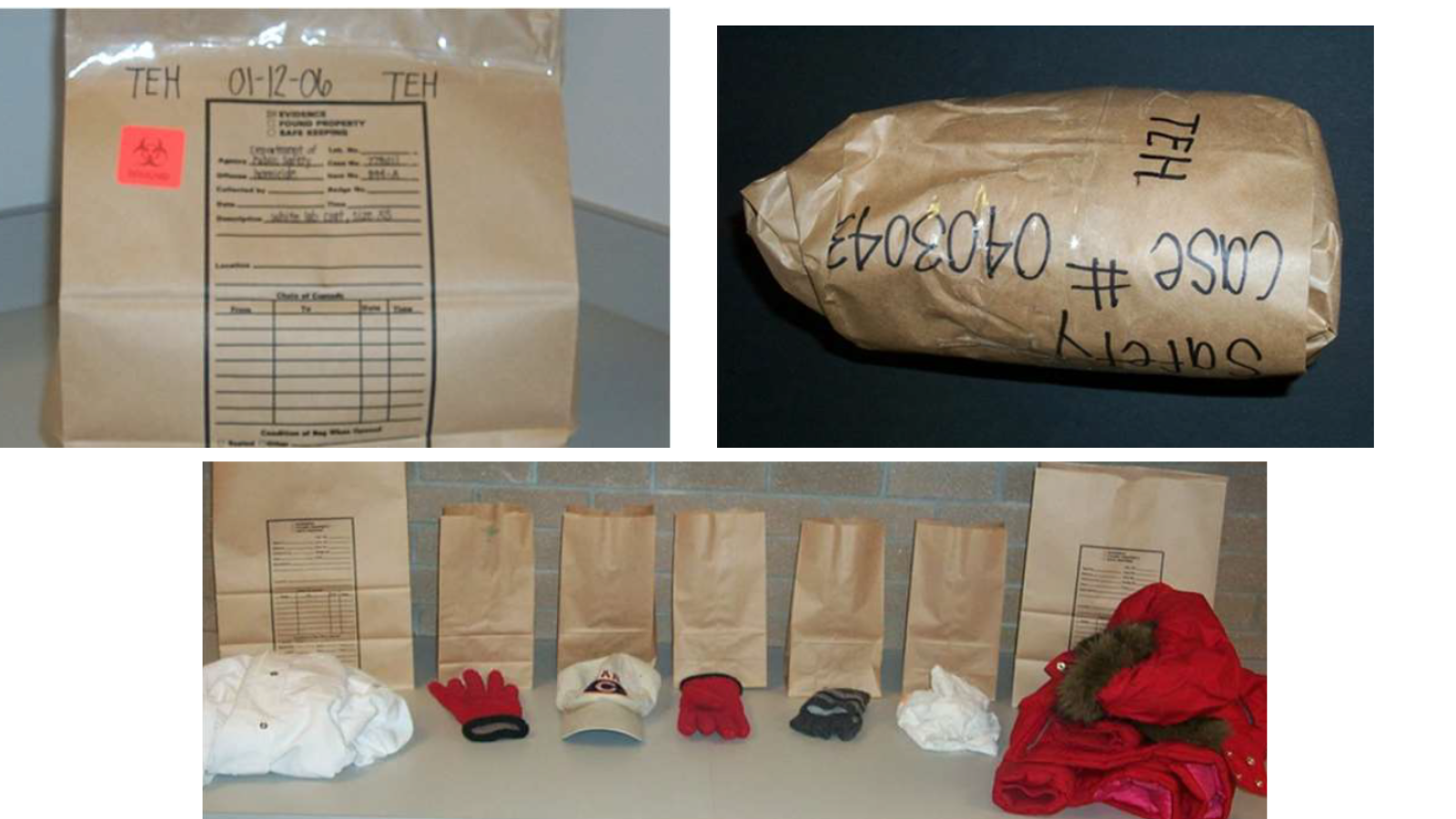
- At a minimum, the packaging must contain:
- Agency Name
- Agency Case Number
- Agency Item Number
- A description of the package contents (if the evidence comes from an individual, their name should be included in the description)
- Clean/unused paper bags, plastic bags, etc. should be used when packaging evidence.
- Gun boxes or cardboard boxes are required for firearms, sharp, and/or heavy items.
- Items that are biohazards, sharps, or glass should be labeled.
 ↑ Back to Contents
Proper Seals & Tape
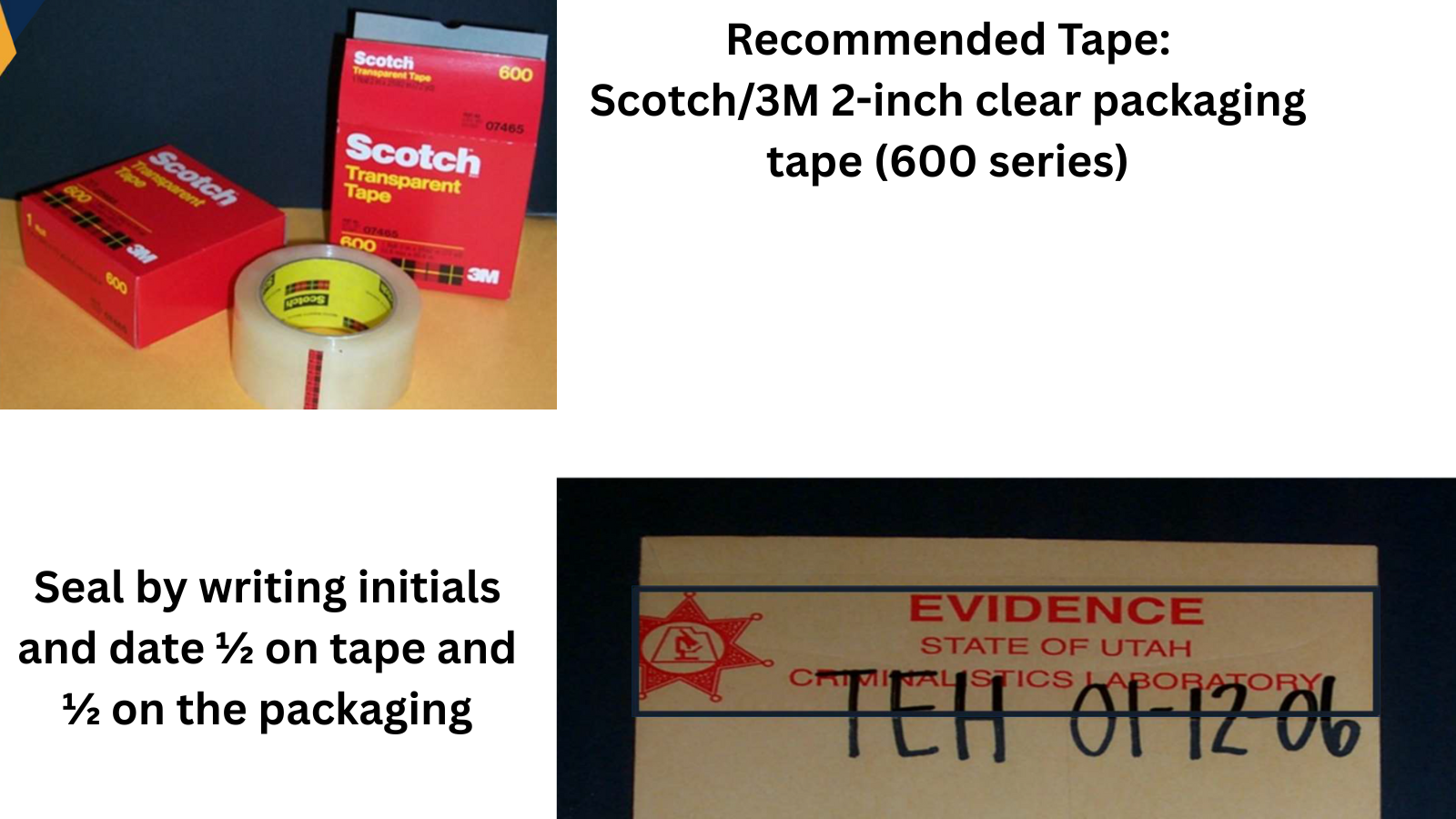
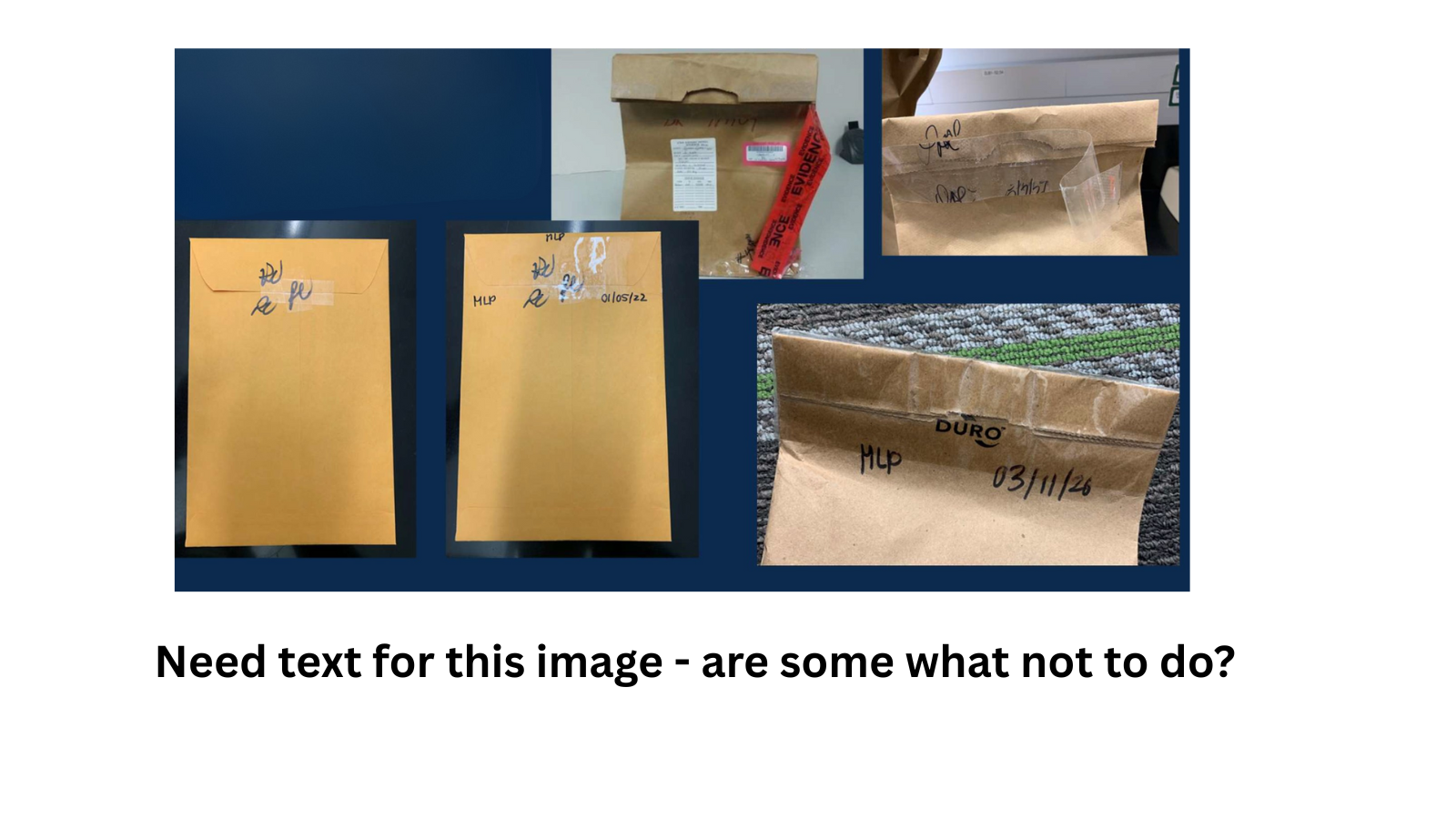
- Seal items with durable tape (packing tape preferred) to prevent loss and contamination.
- Initials and Date: Must be written half on the packaging and half on the tape.
- Prohibited: Staples and stickers are NOT seals. 3/4" Scotch tape is NOT acceptable.
- Items sealed with staples will not be accepted until seal has been corrected or item has been repackaged
- Recommended Tape: Scotch/3M 2-inch clear packaging tape (600 series).
Heat Seals
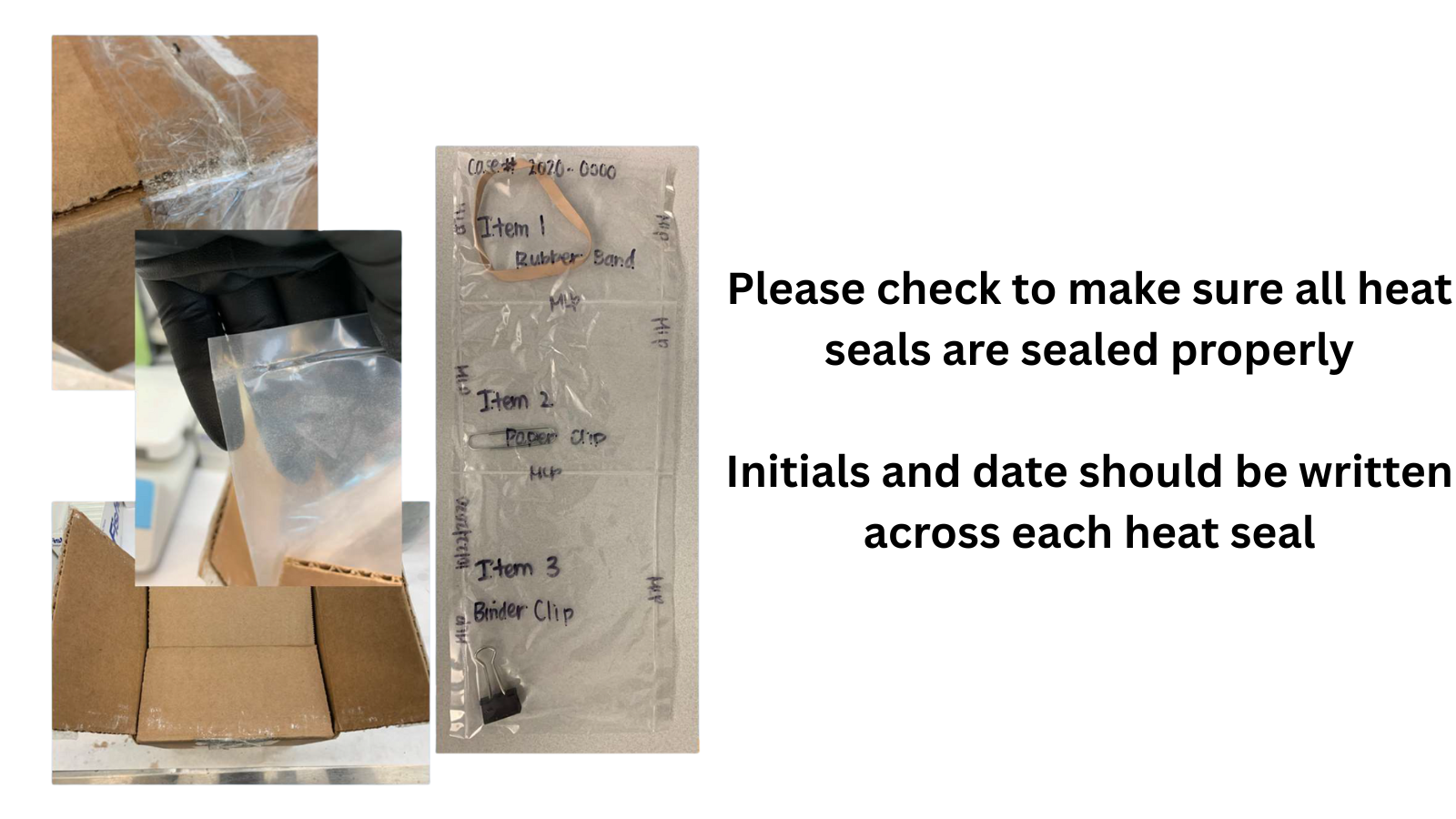
- Check that ALL heat seals are sealed properly.
- Initials and date should be written across each heat seal.
- Items that are heat sealed separate but still connected together are considered one Lab Item regardless of how many agency items there are.
 ↑ Back to Contents
Labeling Evidence
- Packages must be large enough for both the Law Enforcement barcode AND the Crime Lab barcode without overlapping.
- Packages must be large enough to be opened on at least one edge without breaking the original seal.
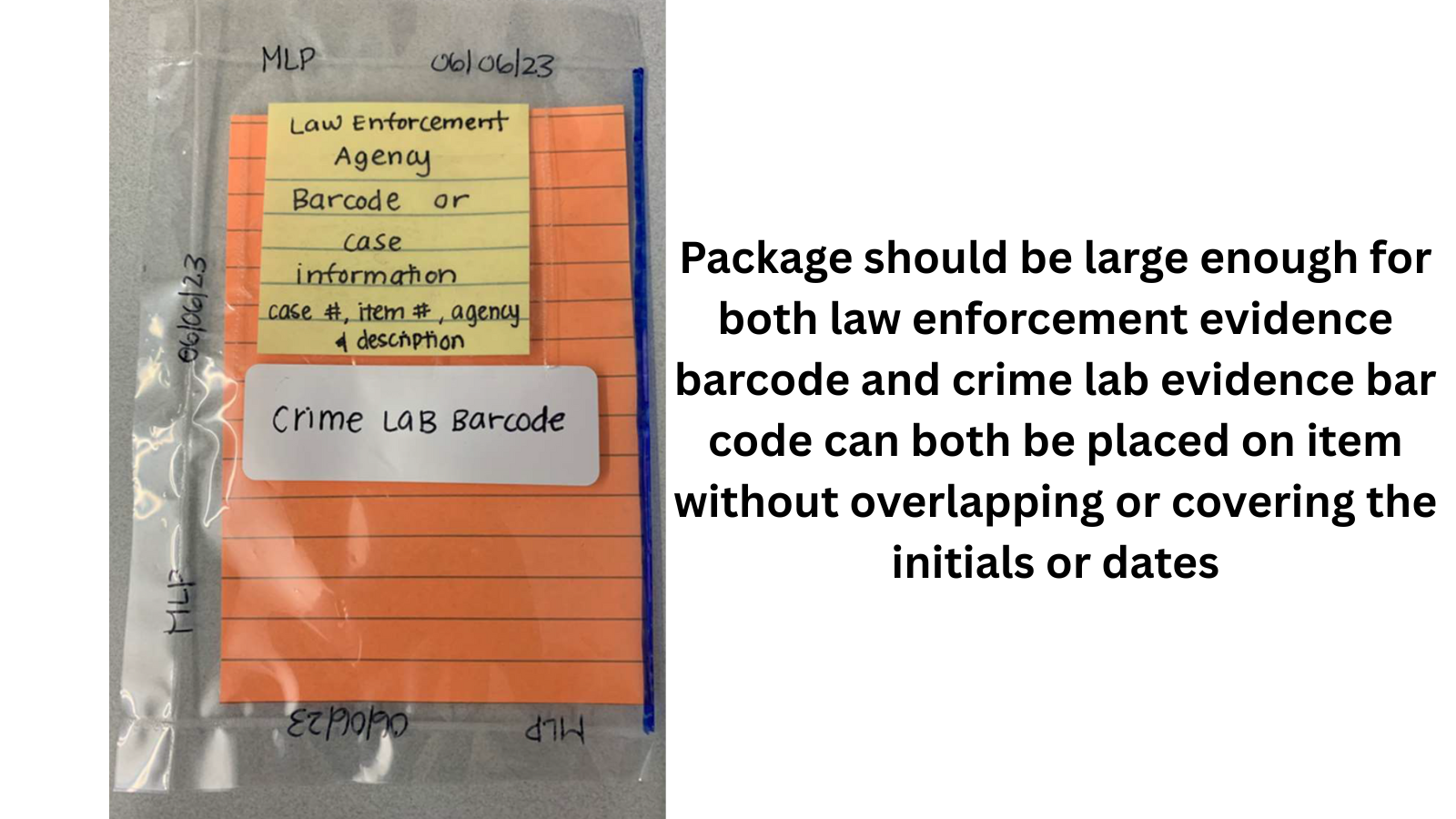
- When using evidence security bags, initial and date across the sticky adhesive seal.
- Granular or Powder SubstancesPlease keep in mind that placing granular or powder substances directly in these types of packages can result in loss of evidence.
- To prevent loss/contamination you can place these small substances inside of a folded piece of paper, a small plastic bag (depending on what type of analysis it may need) or something similar.

Packaging - Biology
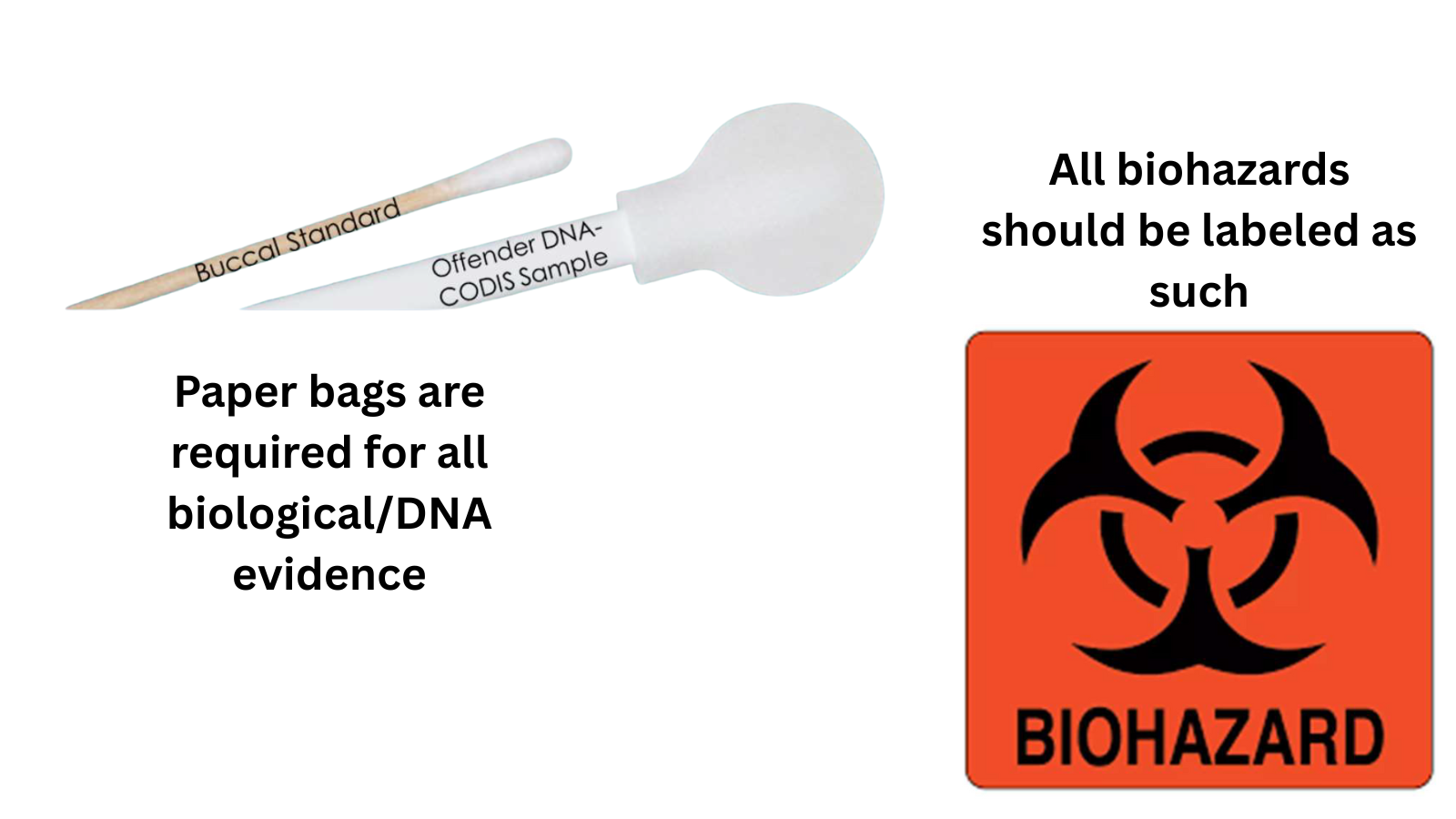
- Paper bags are required for all biological/DNA evidence.
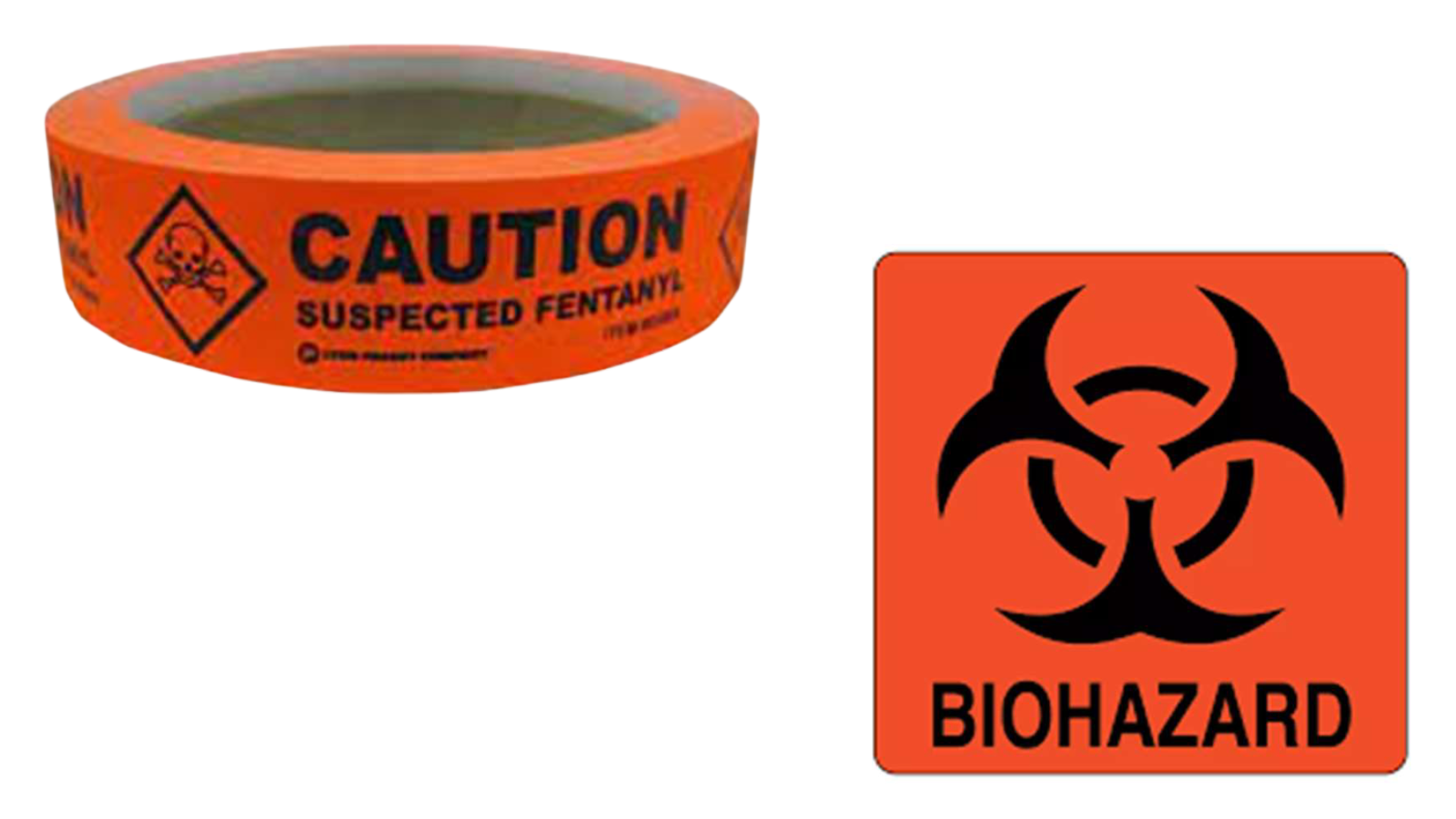
- All biohazards must be labeled as such.
- Buccal standards must have the name of the individual on the packaging.
- Protect them from cross-contamination by packaging them separately.
- CODIS sample kits cannot be used as a standard. Basic sterile swabs are acceptable.
 ↑ Back to Contents
Packaging - Fire Debris
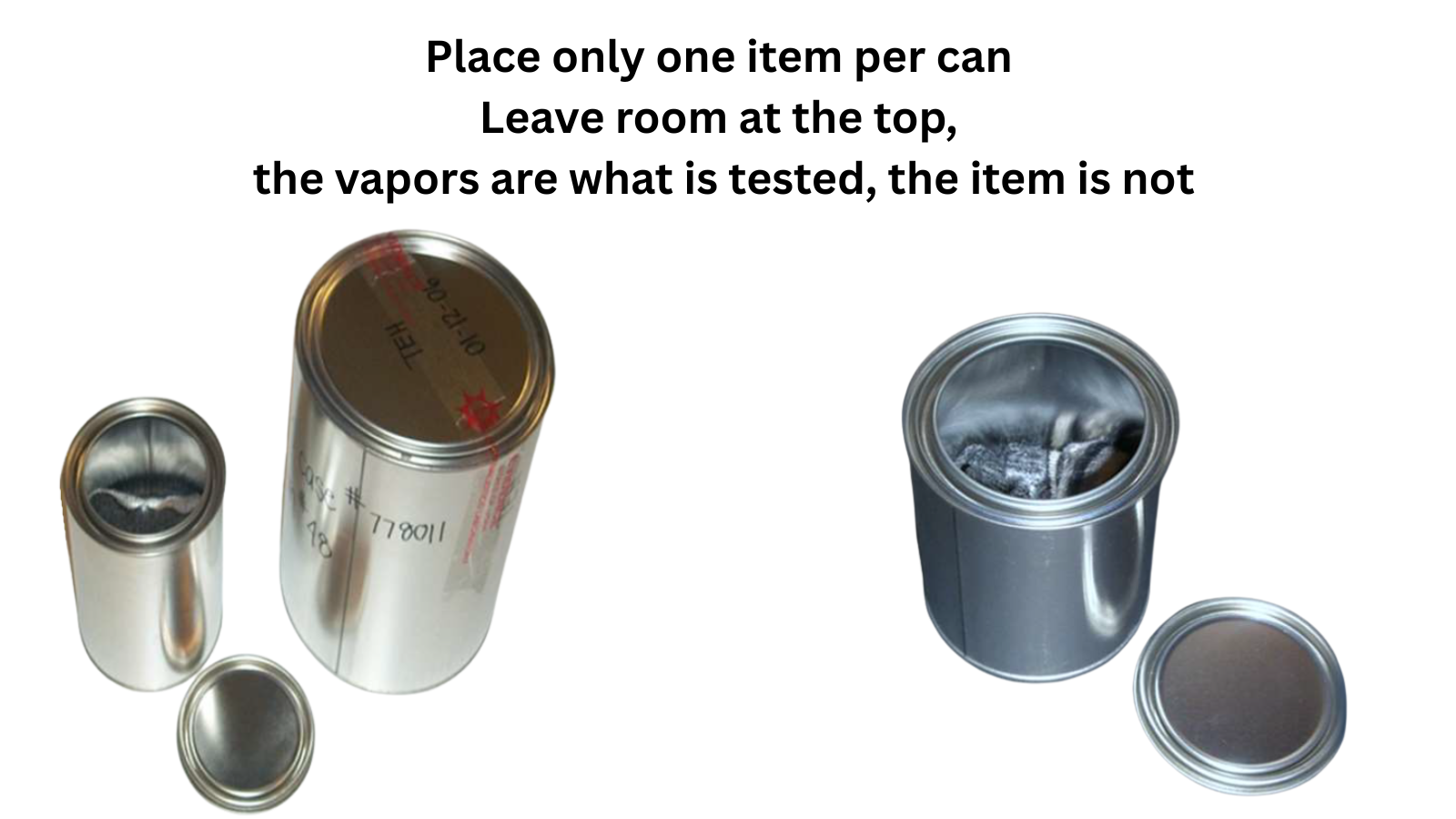
- Metal Cans Only: Clean, unused 1-gallon or quart paint cans.
- Place only one item per can. Leave room at the top, the vapors are what is tested, not the item.
- If items are wet, they still need to be placed into a can.
- All fire debris should be submitted to the lab ASAP.
- Seal with one piece of tape across the top. Initials/Date half on tape, half on can.
- Case #, item # and agency information should be on the side of each can.
- Plastic bags and bottles are NOT suitable.
- If sample is soil: Package in can, place in freezer, and rush to lab and let lab know it is soil.
 ↑ Back to Contents
Packaging - Chemistry
- Plastic bags are recommended for most chemistry cases.
- Exception (Plants): Marijuana/Mushrooms should be in paper to prevent mold.
- Fentanyl: All suspected fentanyl should be overpacked (i.e., must be double-bagged) and labeled with "Suspected Fentanyl" sticker.
- Biohazards: Must be labeled as such (ie., fluid flushed from syringes, drugs recovered from cavities) .
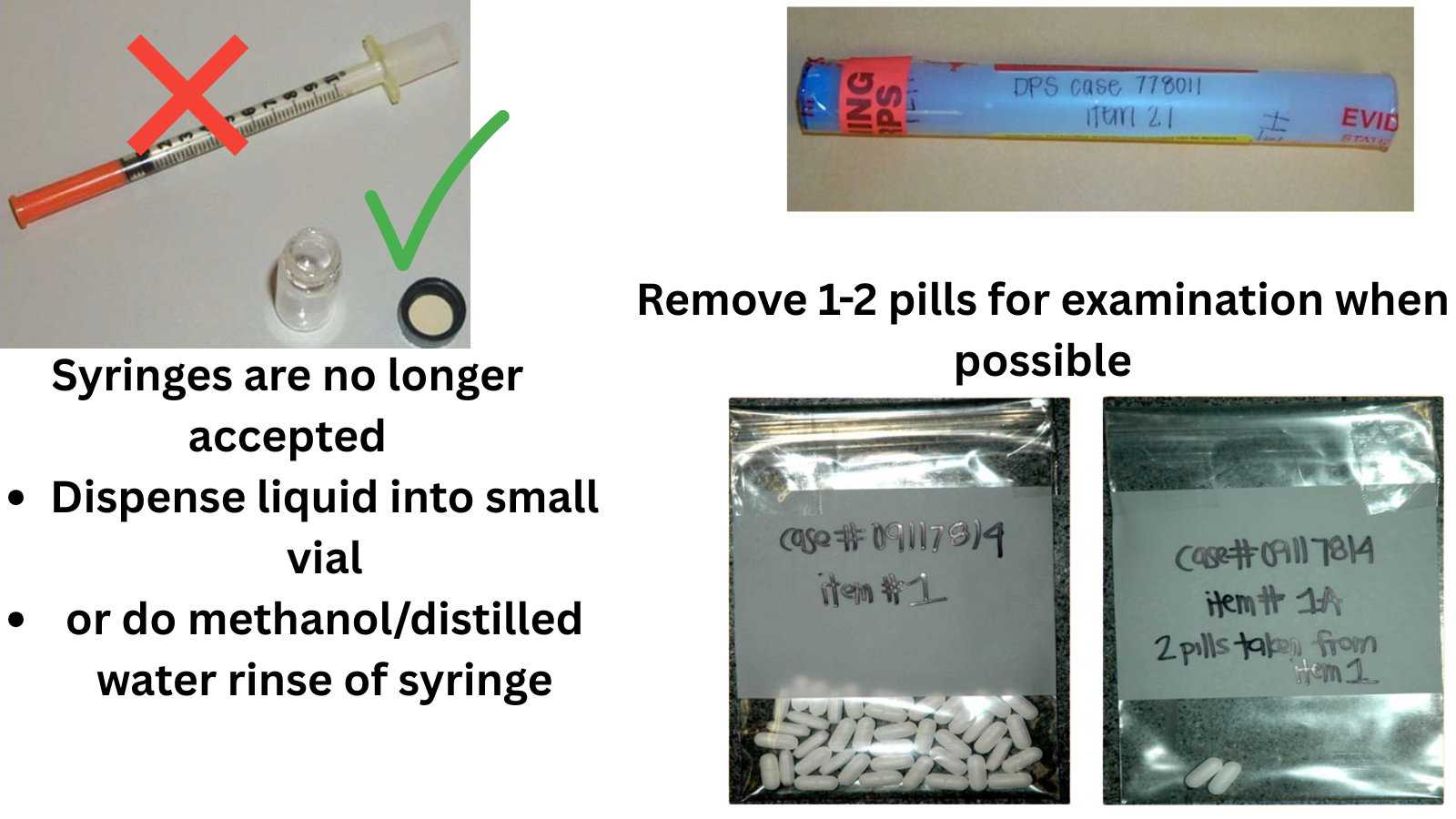
- Syringes: NO LONGER ACCEPTED.
- For Analysis: Dispense liquid into a small glass vial. If substance is not in liquid form, do a methanol or distilled water rinse of the syringe then dispense the liquid into a small glass vial.
- Pills: If there are large quantities of the same type of pill, remove 1-2 pills for examination when possible.
 ↑ Back to Contents
Packaging - Firearms
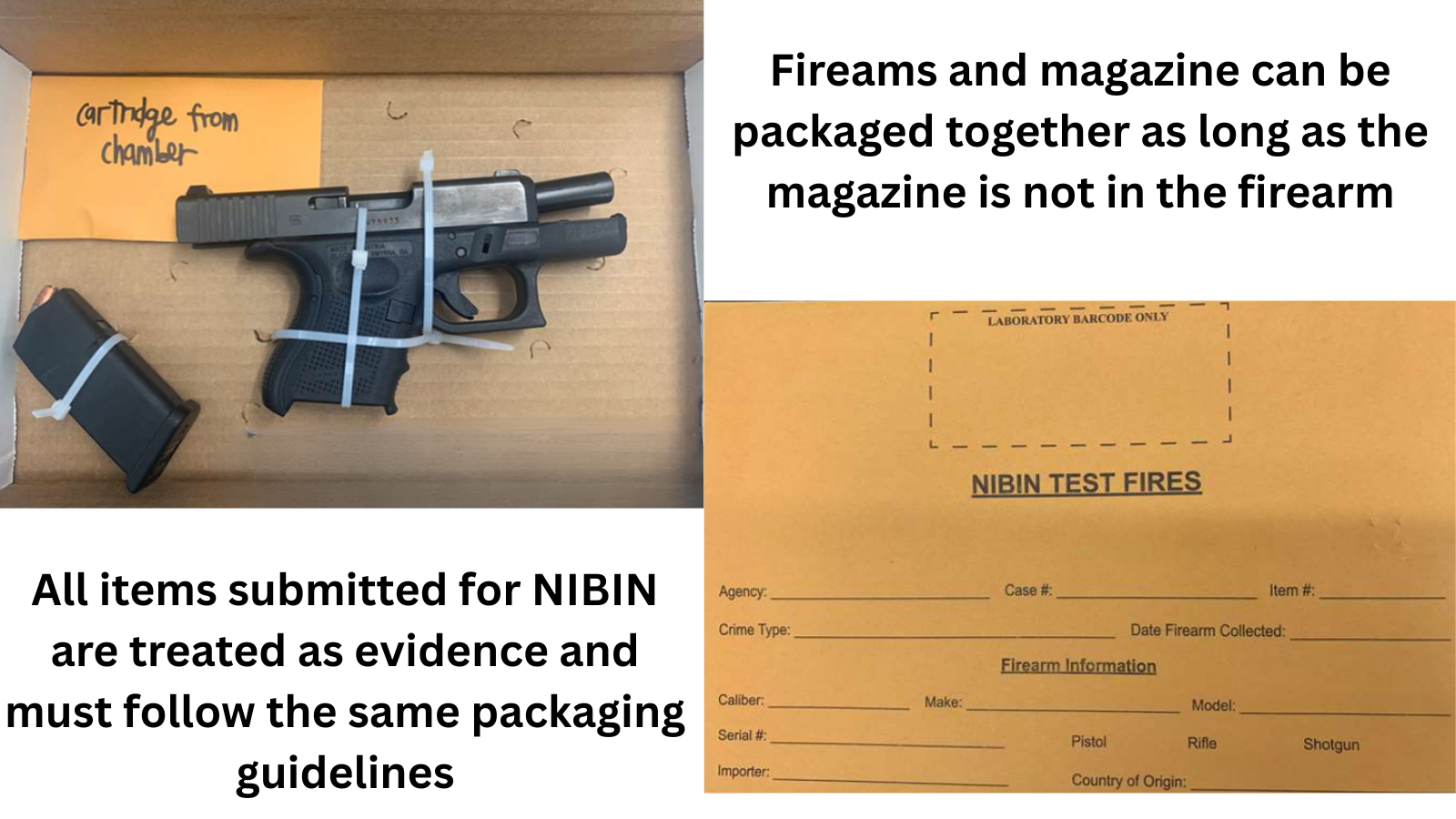
- Unloaded & Safe: All firearms must be rendered safe.
- "WEAPON CLEARED" must be written on the outside of the box.
- Firearms and magazine can be packaged together as long as magazine is not in the firearm.
- Do not unload the magazine, but do not store it inside the firearm.
- Serial number, make, and model must be written on the outer box.
- Seal horizontally along ALL open sides of the box, initial and date half on and half off tape.
- NIBN Submissions:All items submitted for NIBN are treated as evidence and must follow the same packaging guidelines.
 ↑ Back to Contents
Packaging - Sexual Assault Kit (SAK)
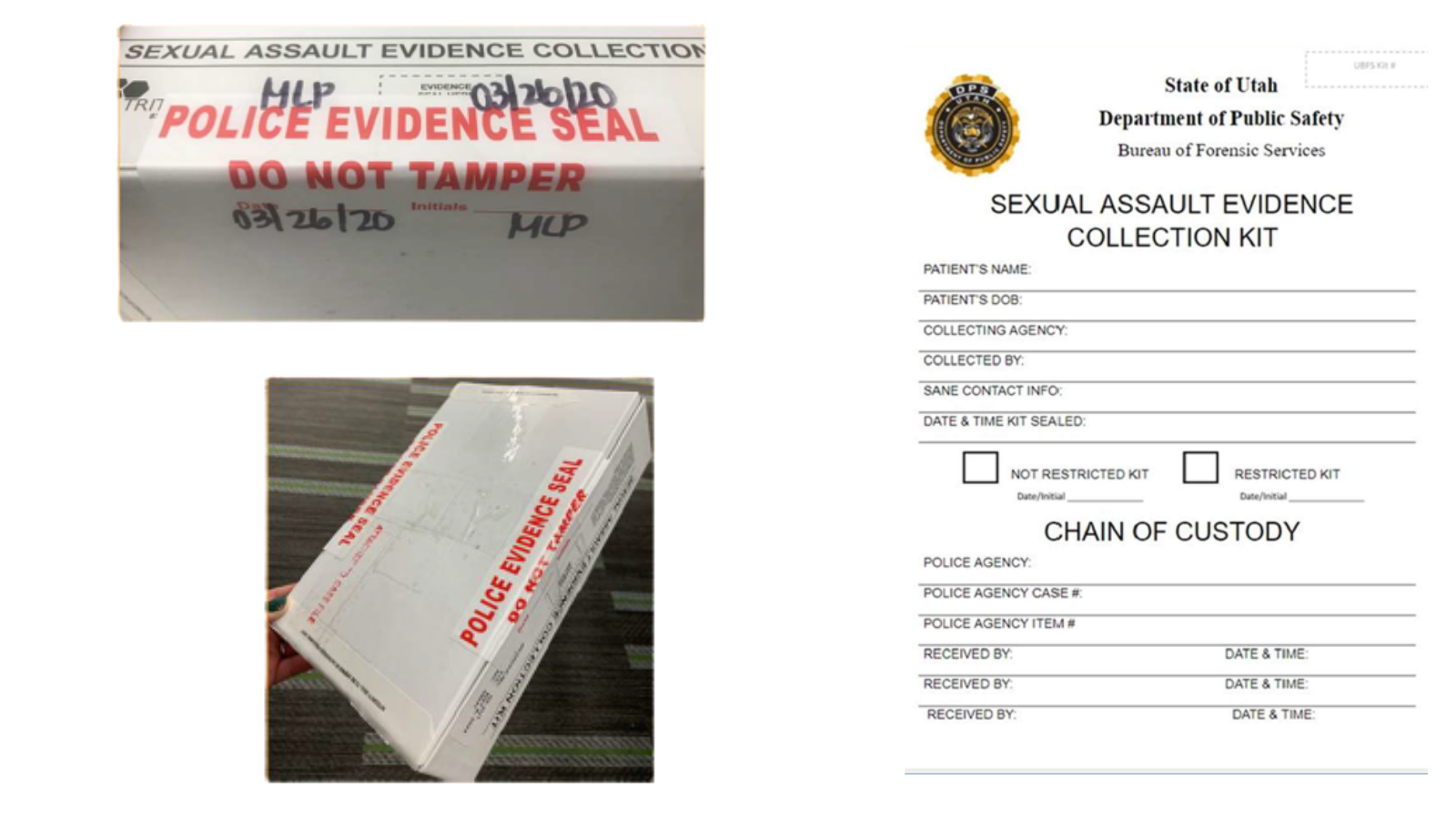
- You should NEVER have to package a kit; the collecting nurse should hand it to you already properly packaged with any additional items separately packaged.
- No Blood/Urine: These should NOT be inside the kit (they go to the Toxicology Lab, not the Crime Lab).
- Check the seal and signature on every kit upon reception. If there are separate items containing blood and/or urine, check those seals as well.
- Nurse paperwork is NO longer needed as the Lab now has access.
- Exception:CJC or Primary Children's cases.
- Kits do not need refrigeration unless they contain a tampon/pad.
 ↑ Back to Contents
Courier Submission Guidelines
We prefer in-person submission, but if shipping follow these guidelines:
- Only submit items to be tested. If you have additional items all packaged together please remove the items not needing to be analyzed by the laboratory.
- Please make sure that your case is pre entered in the CLEL transaction in UCJIS. Print the barcode sheet to send with your evidence to the lab. If the barcode sheet doesn’t print, it could be because pop-up blockers are on. It is best to make sure they are off before you start. If you do not have the capability to pre enter, please send the case information (Investigating officer, supervisor, victim/ suspect names, etc).
- Make sure that all information is filled out and that you sign the released line on the chain. Put the carrier as having received the item (i.E. UPS, fedex).
- NO blood or urine should be shipped to the Crime Lab.
- Do NOT seal paperwork inside the evidence packaging. Place it in the shipping box. The evidence section at the laboratory will need to look at the paperwork and they do not want to have to break the seal.
- Seal shipping box with tape, but DO NOT initial/date the outer shipping seals (intake needs to open it).
- Use a trackable carrier (FedEx or UPS ONLY) when shipping evidence.
- Ship evidence to:
Ship to Main Lab:
Utah Bureau of Forensic Services
Attn: Evidence Section
4451 South Constitution Blvd., 2nd Floor
Taylorsville, Utah 84129
Ship to Southern Lab:
Utah Bureau of Forensic Services
Attn: Evidence Section
181 DL Sargent Dr., Suite B102
Cedar Cityh, Utah 84724
Intake Hours & Locations
Central Lab (Salt Lake)
Evidence Intake
Mon – Fri: 9:30 am – 4:00 pm
Outside hours by appointment only.
Salt Lake City, UT 84129
📍 Get Directions
- Evidence: 801-964-4547
- Main Line: 801-965-4487
- Serology/DNA: 801-965-3870
- Chemistry: 801-965-4382
- Impressions: 801-965-4501
Northern Lab (Ogden)
Evidence Intake
Mon – Thu: 8:00 am – 12:00 pm
Other times by appointment.
Ogden, Utah 84404
📍 Get Directions
Closed Fridays
- Main Line: 801-393-4549
- Fax: 801-393-4574
Southern Lab (Cedar City)
Evidence Intake
Call for Appointment
Please call before bringing evidence.
Cedar City, Utah 84721
📍 Get Directions
- Main Line: 435-867-6795
- Manager: 435-867-6796
- Chemistry: 435-867-6797
- Biology: 435-867-6798
Crime Scene Response (24/7)
For Law Enforcement Agencies ONLY. This line is for active crime scene call-outs only. All other inquiries should be directed to the main lab lines.
801-638-7600