Fibers
About fiber analysis
Fibers are ubiquitous and can easily be transferred during a crime. If they are properly recognized and collected, fibers can link various individuals and places involved in a crime.
Fiber evidence is not limited to carpets and clothing; any object containing fibers can be useful for an investigation, including wetsuits, window screens, wigs, towels, and even fishing line.

Once collected, fibers are submitted to the forensic lab for analysis. The examiner will perform a multitude of tests to:
-
Determine the type of fibers collected.
-
Compare unknown fibers to known fibers from a scene.
The majority of fiber analysis is performed using a polarized light microscope, which helps the analyst determine the optical properties of the fibers. This aids in identifying the fiber type and comparing it to other fibers within the case.


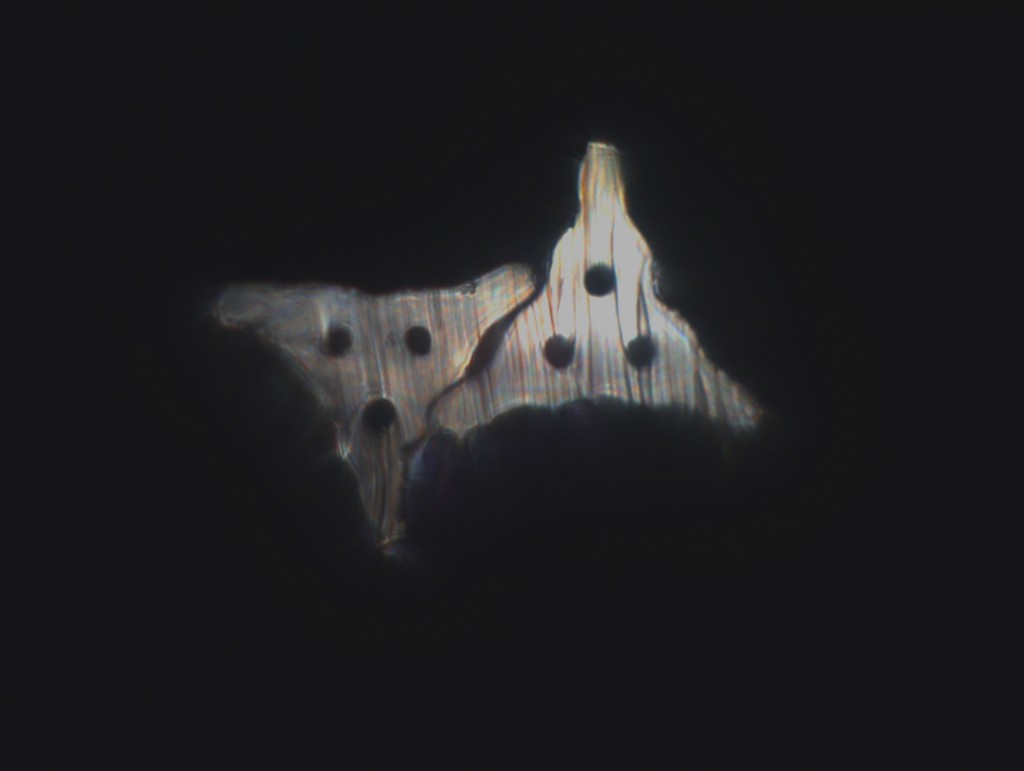
Nylon cross section