Fire Debris
About fire debris analysis
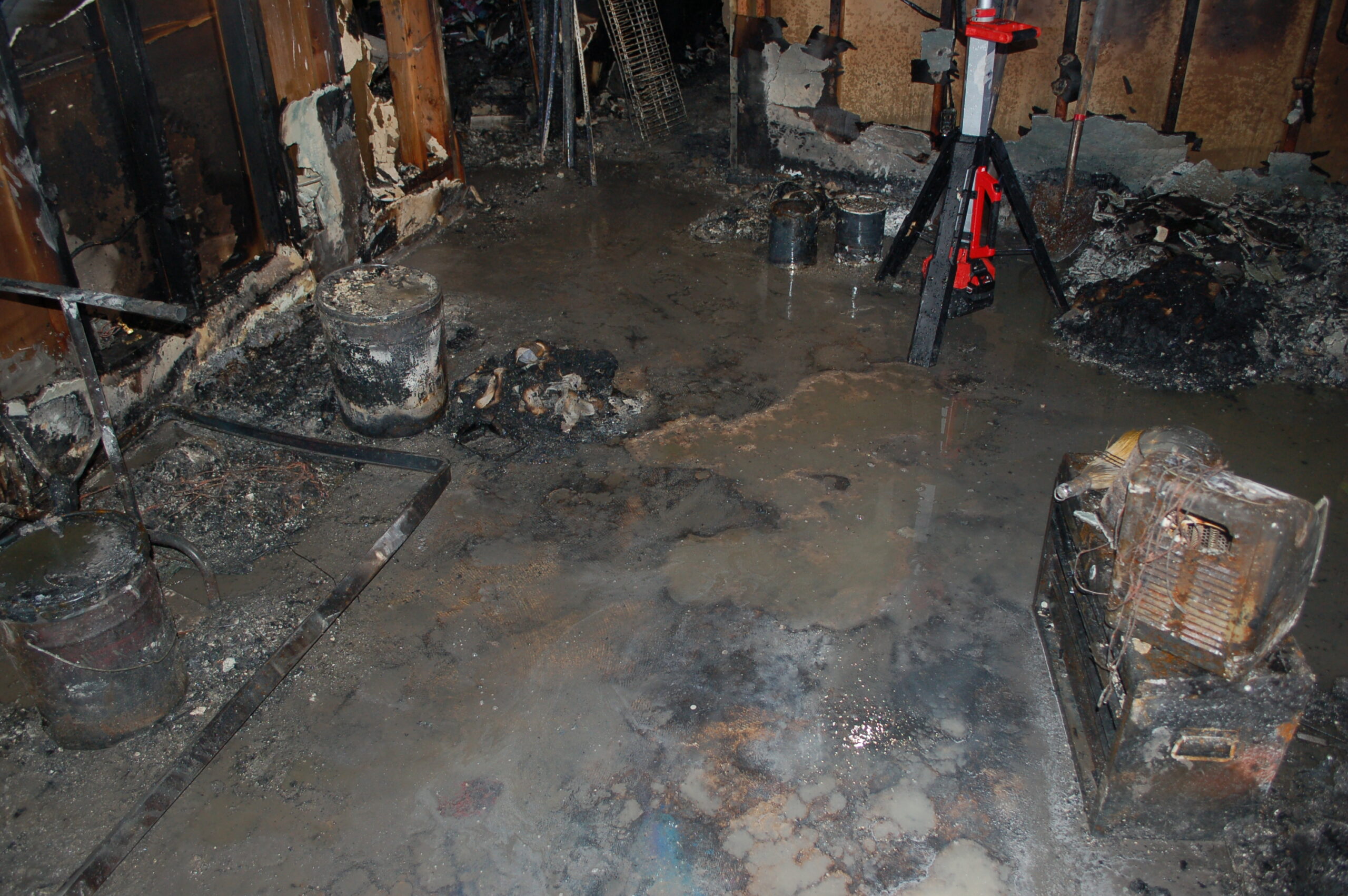
Fire investigators examine clues at a scene to determine how a fire started.
If it is suspected that a fire was started intentionally using an accelerant, the fire debris is collected and sent to the crime lab for analysis.
What is fire debris?
Fire debris is the term used to describe the charred evidence collected at a fire scene. Accelerant detection dogs may be used to pinpoint what fire debris should be collected for examination.
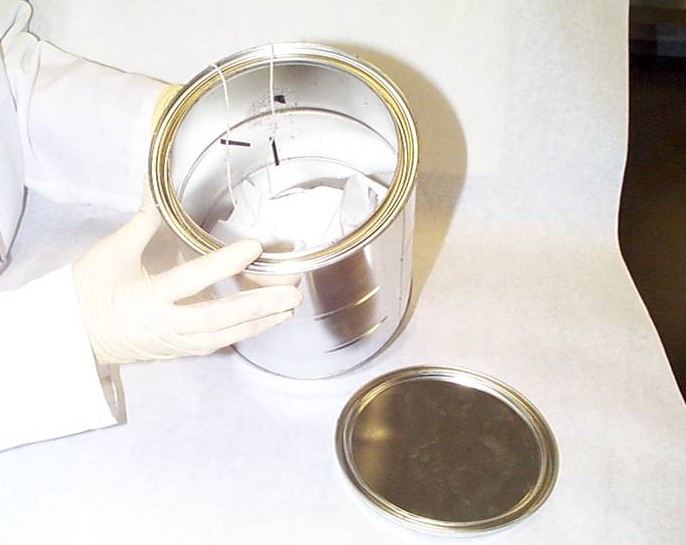
Submission information: It is important to submit fire debris in a metal can to prevent any ignitable liquid residues from evaporating.
The analysis process
The forensic examiner analyzes the evidence using a gas chromatograph-mass spectrometer (GC/MS). The process involves:
-
Heating the can with a charcoal strip inside to vaporize any possible ignitable liquids.
-
Removing the charcoal strip and placing it into a solvent.
-
Analyzing the solvent with a GC/MS to create a distinct chromatographic profile.
By comparing this profile to a standard, the analyst can determine which type of ignitable liquid was present, such as gasoline, kerosene, or diesel fuel.
Submission information: To assist with the analysis, investigators should also submit comparison samples of suspected accelerant liquids and control samples from the background materials.